Trusted Same Day EICR Certificate Service
Same-Day EICR Certificate in Queensbury
Landlord-ready Electrical Installation Condition Report (EICR) for flats and houses across Queensbury — tested to current wiring standards and issued fast.
- Fixed, upfront pricing (no hidden extras)
- Clear fault codes and remedial guidance (if needed)
- Fast turnaround on your EICR report and documentation
Qualified, insured electricians • Evening/weekend slots • Digital PDF report


What is an Electrical Certificate?
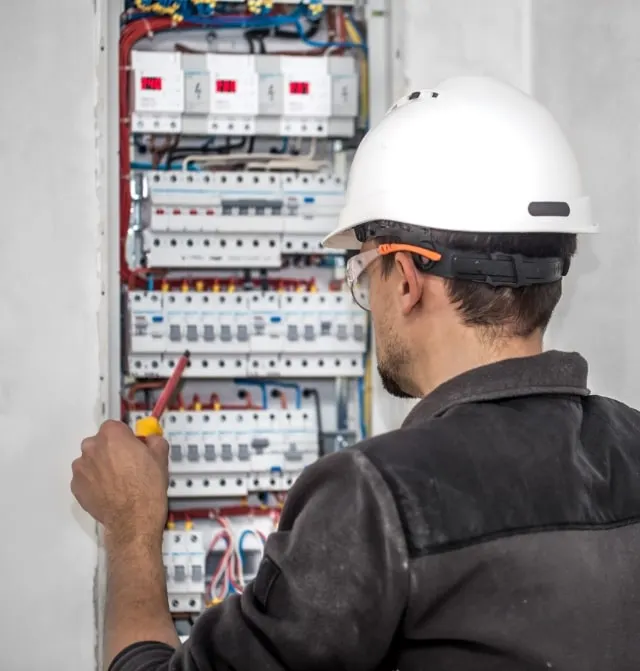
An electrical inspection assesses whether or not your property’s electrical wiring is in good working order and whether or not it complies with safety rules. After the inspection, you will be awarded an electrical certificate or an Electrical Installation Condition Report (EICR).
Why choose us for electrical certifications?
We provide complete electrical inspections and safety certificates at the most reasonable prices, with the best service.
Our fully qualified engineers are highly skilled in preparing both periodic electrical inspection reports and electrical installation certificates, and they possess the essential credentials. At all times, our staff maintain a professional manner, and their safety is always a primary priority.

Do Queensbury landlords need Electrical Certificates?
To safeguard your renters and yourself as a landlord, an electrical inspection and certificate should be performed every three to five years. It’s vital to show that you’ve taken all reasonable efforts to ensure that your tenants are safe and won’t be harmed by electrical issues.
As a complimentary service to all landlords, we provide free energy saving advice with all Electrical Certificates. When it comes to making homes more energy efficient, we’re Queensbury experts, saving both money and
the environment.
Frequently Asked Questions
What is an EICR (Electrical Installation Condition Report) inspection, and what does it check?
An EICR is a formal inspection and test of a property’s fixed electrics (wiring, socket circuits, light circuits, consumer unit/fuse box, earthing and bonding, and permanently connected items like showers/extractors). It confirms whether the installation is safe for continued use, highlights fire/shock risks, and lists any issues using classification codes with a recommended next inspection date.
What does EICR stand for in electrical safety testing?
EICR stands for Electrical Installation Condition Report.
How long is an EICR valid for, and how often should it be renewed?
For rented properties in England, the electrics must be inspected and tested at least every 5 years, or sooner if the report sets an earlier date. In owner-occupied homes, the interval is typically based on risk and condition (often around 10 years as a general safety benchmark), or when buying/selling.
Who can carry out an EICR and issue the report?
An EICR must be completed by a qualified and competent person (usually an electrician trained in inspection and testing). They should have the right testing equipment, know current wiring standards (BS 7671), and be able to produce a compliant report.
What makes an electrician “qualified and competent” for EICR inspection and testing?
Look for someone who can evidence inspection & testing competence, up-to-date knowledge of BS 7671 (18th Edition), and relevant experience with domestic circuits/consumer units. Being on a recognised competent person / electrical scheme (e.g., NICEIC/NAPIT-style registration) is a common credibility signal, alongside insurance and calibrated test equipment.
Where do I find my next EICR due date?
The EICR includes a recommended date for the next inspection and test. Many electricians also add a label/sticker on or near the consumer unit showing the next due date.
If an EICR is “unsatisfactory”, what happens next — and do I need a new EICR?
“Unsatisfactory” usually means the report includes C1, C2, or FI items. The next step is to complete the required remedial work or further investigation within the stated timeframe (often within 28 days, or sooner if the report says). You don’t automatically need a full new EICR every time — but you do need written confirmation from a qualified person that the necessary work has been completed and the installation is safe.
Do landlords need a new EICR for every new tenancy?
Not necessarily. If you already have a current, satisfactory EICR that’s still within its valid interval (and the next inspection date hasn’t passed), you can usually reuse it. You must give the new tenant a copy before they move in, and renew the inspection when it’s due (or earlier if there are safety concerns).
How do I read EICR codes (C1, C2, C3, FI) and what do they mean?
- C1 = Danger present (immediate risk)
- C2 = Potentially dangerous (urgent attention needed)
- FI = Further investigation required without delay
- C3 = Improvement recommended (does not fail the report on its own)
In practice, C1/C2/FI typically make the report unsatisfactory until addressed; C3-only reports can still be satisfactory.
How much does an EICR cost in the UK, and what are the main price factors?
EICR costs vary by property and scope. The biggest price factors are: property size/layout, number of circuits and consumer units, access to accessories (sockets/lights), age/condition of wiring, whether power isolation is straightforward, and whether remedial works are needed (usually priced separately from the inspection/report).
Is an EICR a legal requirement for landlords in England (private rented sector)?
Yes — in England’s private rented sector, landlords must have electrical installations inspected and tested by a qualified person at least every 5 years, obtain a written report (usually an EICR), and provide copies to tenants and (if requested) the local council. Failure to comply can lead to financial penalties.
How long does an EICR take for a flat or house?
Timing depends mainly on the number of circuits, access, and whether faults slow testing down. A small flat with good access may be around 1–2 hours; larger homes or complex installs (extensions, outbuildings, multiple boards) can take several hours.
When did EICR rules start for England’s private rented sector (key dates)?
The regulations came into force on 1 June 2020, applied to new tenancies from 1 July 2020, and applied to existing tenancies from 1 April 2021.
Other Areas We Cover
EICR certificates available across Queensbury and nearby areas.
Get your Electrical Safety Certificate in Queensbury today
Friendly, fully-qualified engineers and fast turnaround. Call now for a free, no-obligation quote.